
What is this thing Exploding Called Nito Infused Coffee

Nitrogen-infused coffee, commonly known as “nitro coffee,” is relatively new to the coffee scene. It borrows a technique from the beer brewing industry, where nitrogen has been used for years to create beers with creamy textures and foamy heads.

Origin: Nitro coffee was reportedly first introduced in 2011-2012 by a small, innovative coffee company in Austin, Texas named Cuvee Coffee. The idea was then popularized by Stumptown Coffee in Portland, Oregon, and it wasn’t long before it spread to specialty coffee shops across the U.S. and then internationally. The technique of infusing coffee with nitrogen was inspired by the craft beer industry, particularly by Guinness, which is well-known for its creamy, nitrogen-infused beers.

Popularity: Nitro coffee is popular with coffee enthusiasts who are looking for a new and unique coffee experience. It’s also popular with people who prefer cold and iced coffee, especially during the warmer months. Nitro coffee has a sweeter, creamier taste than regular coffee, which can make it more appealing to people who find regular coffee too bitter. Additionally, the lower acidity of cold brew coffee (the base for nitro coffee) can be easier on the stomach.
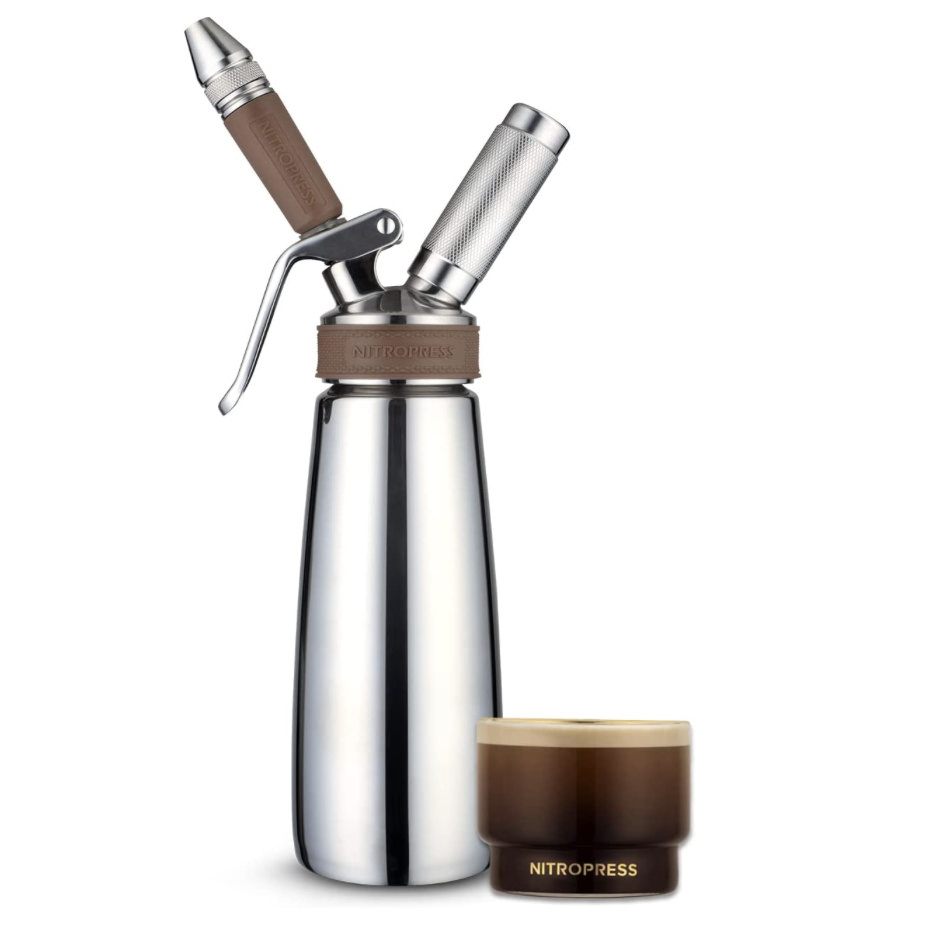
Hatfields London NitroPress

Making Nitro Coffee at Home: While it’s definitely more complex than brewing a standard pot of coffee, it is possible to make nitro coffee at home. Here’s a basic overview of the process:

  1. Brew Cold Brew Coffee: This is the base for your nitro coffee. Coarsely grind your coffee beans and then steep them in cold water for 12 to 24 hours. Strain the mixture to remove the grounds, and you have cold brew coffee.
  2. Nitrogen Infusion: For this step, you’ll need a whipped cream dispenser or a “keg” system designed for home use. Both of these should come with nitrogen cartridges. Fill the whipped cream dispenser or keg with your cold brew coffee and then follow the manufacturer’s instructions to infuse the coffee with nitrogen.
  3. Serve: Nitro coffee is typically served cold without ice (ice can dilute the frothy texture). Pour your coffee into a glass and watch as the nitrogen bubbles create a frothy, beer-like head. Enjoy as is, or add a splash of milk or sweetener if you prefer.

Please remember, using nitrogen canisters requires attention and respect for safety guidelines. Always follow the instructions and safety precautions provided by the manufacturer. If you’re not comfortable handling nitrogen gas at home, you can always enjoy nitro coffee from a local coffee shop.

Please note that if you purchase from clicking on the link, some will result in my getting a tiny bit of that sale to help keep this site going.

Coffee Myths Debunked: Stirring the Truth into Your Cup

Coffee, beloved by many of us for its aroma, flavor, and stimulating properties, is often a subject of numerous myths and misinformation. With its global popularity, it’s not surprising that it becomes a center for various debates regarding its effects on health, caffeine content, and more. From age-old tales of stunted growth to misconceptions about caffeine levels in different roasts, many of these claims lack scientific grounding. Let’s debunk some of these widespread coffee misconceptions that have brewed alongside our favorite cup.

Coffee Dehydrates You: While it’s true that caffeine can have a mild diuretic effect, the amount of water in a cup of coffee tends to make up for this. As a result, drinking moderate amounts of coffee doesn’t dehydrate you under normal circumstances.

Coffee Stunts Your Growth: There is no scientific evidence to support the claim that drinking coffee stunts growth. This myth might have originated from old studies that associated coffee with bone loss, but those findings are outdated and have been debunked.

Espresso Has More Caffeine than Regular Coffee: This is a matter of serving size. While espresso has more caffeine per volume, a typical serving of espresso is much smaller than a serving of regular coffee. Therefore, a cup of drip coffee often contains more total caffeine than a shot of espresso.

Coffee Helps You Sober Up: Coffee might help with the drowsiness associated with alcohol, but it doesn’t help metabolize alcohol faster. Drinking coffee can give the impression of being less drunk, but it doesn’t change the body’s level of intoxication.

Dark Roast Coffee Has More Caffeine: In fact, the roasting process breaks down the caffeine molecule. Thus, dark roast beans, which are roasted longer, actually have slightly less caffeine than light roast beans. However, the difference is quite small and likely won’t significantly affect the caffeine content of your cup.

Decaf Coffee is Caffeine-Free: Decaffeinated coffee still contains small amounts of caffeine. While it’s significantly less than regular coffee, it’s not completely caffeine-free.

Coffee is Bad for Your Health: While it’s true that excessive coffee consumption can have negative effects, moderate coffee intake can actually have several health benefits. It’s rich in antioxidants and has been associated with a lower risk of certain types of cancer, Parkinson’s disease, type 2 diabetes, and liver disease.

Remember, most of these effects depend on various factors including the quantity of coffee consumed, individual tolerance to caffeine, and overall diet and lifestyle. I’m not a doctor, these are just bits of information I found helpful when thinking about things people say about my favorite drink.

Please note that if you purchase from clicking on the link, some will result in my getting a tiny bit of that sale to help keep this site going.

The Controversy of the Flat White Silky Coffee

There’s always been a certain rivalry between Australia and New Zealand, even when it comes to the origin of the controversial, silky coffee drink known as the flat white. Both countries claim to have created this fine brew, and while we might not be able to settle that debate, we can certainly delve into the rich history of this beloved beverage.

The Birth of the Flat White

The flat white’s history is a bit hazy, with both Australia and New Zealand claiming it as their invention. The term first appeared in Australia around the mid-1980s. The story goes that Alan Preston moved from Sydney to Queensland in 1985 and started a coffee shop named Moors Espresso Bar. Preston claims he invented the term “flat white” as a way to simplify the coffee menu. He wanted a term that would encapsulate the idea of a milky coffee without the froth and foam associated with a cappuccino.

On the other hand, New Zealand’s claim lies with Fraser McInnes, a barista at a well-known Wellington coffee shop named DKD Cafe. In 1989, McInnes claims he inadvertently created the flat white when the milk for a cappino failed to froth correctly. He served the drink anyway, and it became popular as a new style of coffee.

What Makes a Flat White?

A flat white is essentially an espresso-based coffee drink that contains a similar amount of coffee but less milk than a latte, and less foam than a cappuccino. A flat white is typically served in a smaller ceramic cup and features a higher ratio of coffee to milk, allowing the espresso’s flavor to shine through.

The secret of a great flat white lies in the steaming of the milk. The milk is steamed to create microfoam, which is velvety and smooth, creating a rich, creamy texture when poured over the espresso. The result is a beautifully balanced coffee drink where the espresso and milk complement each other rather than one overwhelming the other.

The Rise of the Flat White

The flat white remained a Down Under secret for many years, with only the most discerning international coffee lovers knowing of its existence. That began to change in the 2000s, as Antipodean coffee culture started spreading worldwide, especially in the UK and the USA.

The flat white started gaining recognition internationally in the late 2000s and early 2010s when big-name coffee chains began introducing it to their menus. In 2010, Starbucks started selling the flat white in their Australian stores before launching it in the USA and UK in 2015. This boosted the flat white’s popularity, and it soon became a staple on coffee menus worldwide.

The Legacy of the Flat White

Today, the flat white is a globally recognized coffee beverage. It’s the pride of Antipodean coffee culture and a testament to the influence of Australian and New Zealand coffee techniques worldwide.

In the end, whether the flat white was born in Australia or New Zealand might not matter as much as what it represents: a commitment to quality, an appreciation for balance, and a love for coffee that transcends borders. This creamy, smooth coffee drink has become a gift to coffee lovers around the world, and for that, we have our friends in the Southern Hemisphere to thank.

Please note that if you purchase from clicking on the link, some will result in my getting a tiny bit of that sale to help keep this site going.

The Science of Crema: Understanding the Golden Layer

Espresso, a complex concoction of water and coffee, is often crowned by a golden-brown layer of foam, known as crema. It’s an integral part of the espresso experience, serving as a sensory preview of the espresso’s quality, and providing aromatics that enhance the overall taste. The science of crema is multifaceted, involving chemistry, physics, and even a bit of art.

The Chemistry of Crema

The formation of crema begins at the cellular level of the coffee bean. Coffee beans are composed of about 800 volatile compounds, including lipids, proteins, sugars, and carbon dioxide. When coffee beans are roasted, a process known as the Maillard reaction occurs, which leads to the creation of even more volatile compounds, along with the rich brown color of the beans.

When the hot water meets the ground coffee in an espresso machine, it extracts these volatile compounds. The high pressure forces water through the coffee grounds, which extracts oil droplets encapsulating some of these compounds. This oil is crucial to crema formation.

The pressurized water also liberates trapped carbon dioxide gas within the coffee grounds. The CO2 wants to escape and forms bubbles. These bubbles get coated with the oil droplets, effectively creating the crema.

The Physics of Crema

The high pressure used in espresso machines, usually around 9 bars or 130 PSI, is key to the creation of crema. This high pressure helps to dissolve more CO2 from the coffee grounds into the water. When the pressure decreases as the espresso shot is pulled, the CO2 comes out of the solution, forming tiny bubbles.

These bubbles are stabilized by the oils and compounds extracted from the coffee. The oils form a thin layer around each bubble, preventing them from bursting too quickly and helping to create that desirable, persistent crema layer.

The Art of Crema

The quality and quantity of crema can be influenced by several factors, including the freshness of the coffee, the grind size, the roast profile, and the extraction method.

Fresh coffee tends to produce more crema because it contains more CO2. As coffee ages, CO2 gradually escapes, which means less gas is available to create those bubbles.

The grind size is also important. If the grind is too coarse, water will pass through the grounds too quickly, not extracting enough oils or CO2. If it’s too fine, the water may not be able to pass through at all. The perfect grind size for espresso is often described as being like fine sand.

The roast profile can affect the crema too. Darker roasts typically produce more crema due to the longer roasting process, which creates more oils. However, lighter roasts might produce crema with more complex flavors, as they preserve more of the coffee’s inherent flavor compounds.

Crema is a complex combination of coffee oils, volatile compounds, and CO2 bubbles. It’s a fascinating subject at the intersection of chemistry, physics, and art, where understanding the science can lead to a better appreciation of the beauty and taste of a well-crafted espresso.

Please note that if you purchase from clicking on the link, some will result in my getting a tiny bit of that sale to help keep this site going.

How to Fine-Tune an Espresso Machine for the Best Results

I thought you might be interested in some notes I put together about getting the most out of your espresso machine. First, a few things to consider, then I did an outline of the process to fine tune/test/tune each part of the espresso making process.

Learning and tuning the process of using an espresso machine is incredibly important for several reasons:

  1. Quality of Espresso: Espresso is a complex beverage, and the quality of the final product is a direct result of multiple variables working in concert. Understanding your machine and learning to fine-tune its settings will allow you to extract the best possible flavor from your coffee beans.
  2. Consistency: Once you’ve found the perfect extraction settings for a particular type of coffee bean, knowing how to reproduce those settings will ensure you can create the same high-quality espresso shot every time. A well-tuned espresso machine is the key to consistency.
  3. Understanding of Coffee: Learning to use and tune an espresso machine will deepen your understanding of coffee in general. You’ll gain insight into how the origin, roast level, and grind size of coffee beans affect the flavor of the espresso. This understanding can enhance your appreciation of the coffee you drink.
  4. Efficiency: A well-tuned espresso machine will operate more efficiently, saving time during the brewing process. It can also prevent wasted coffee from shots that aren’t up to standard.
  5. Maintenance and Longevity of Your Machine: Regularly tuning and maintaining your espresso machine will ensure it operates at its best for as long as possible. Neglecting this can lead to poor performance and potentially costly repairs or replacements.
  6. Personal Satisfaction: There’s a certain satisfaction that comes from mastering a skill, and making a perfect shot of espresso is no exception. The process of learning, experimenting, and fine-tuning your espresso machine can be a rewarding experience, adding another layer of enjoyment to your coffee routine.
  7. Creativity and Experimentation: Understanding the workings of your machine and how to fine-tune it opens up a world of creativity and experimentation. You can start to play with different beans, grinds, and extraction times to create your own unique flavors.

Learning to use and fine-tune an espresso machine isn’t just about making a good cup of coffee—it’s about understanding and appreciating the process behind it. It’s an investment in time and effort that yields delicious results and a deeper connection to the art and science of coffee making.

Please note that if you purchase from clicking on the link, some will result in my getting a tiny bit of that sale to help keep this site going.