
What is this thing Exploding Called Nito Infused Coffee

Nitrogen-infused coffee, commonly known as “nitro coffee,” is relatively new to the coffee scene. It borrows a technique from the beer brewing industry, where nitrogen has been used for years to create beers with creamy textures and foamy heads.

Origin: Nitro coffee was reportedly first introduced in 2011-2012 by a small, innovative coffee company in Austin, Texas named Cuvee Coffee. The idea was then popularized by Stumptown Coffee in Portland, Oregon, and it wasn’t long before it spread to specialty coffee shops across the U.S. and then internationally. The technique of infusing coffee with nitrogen was inspired by the craft beer industry, particularly by Guinness, which is well-known for its creamy, nitrogen-infused beers.

Popularity: Nitro coffee is popular with coffee enthusiasts who are looking for a new and unique coffee experience. It’s also popular with people who prefer cold and iced coffee, especially during the warmer months. Nitro coffee has a sweeter, creamier taste than regular coffee, which can make it more appealing to people who find regular coffee too bitter. Additionally, the lower acidity of cold brew coffee (the base for nitro coffee) can be easier on the stomach.
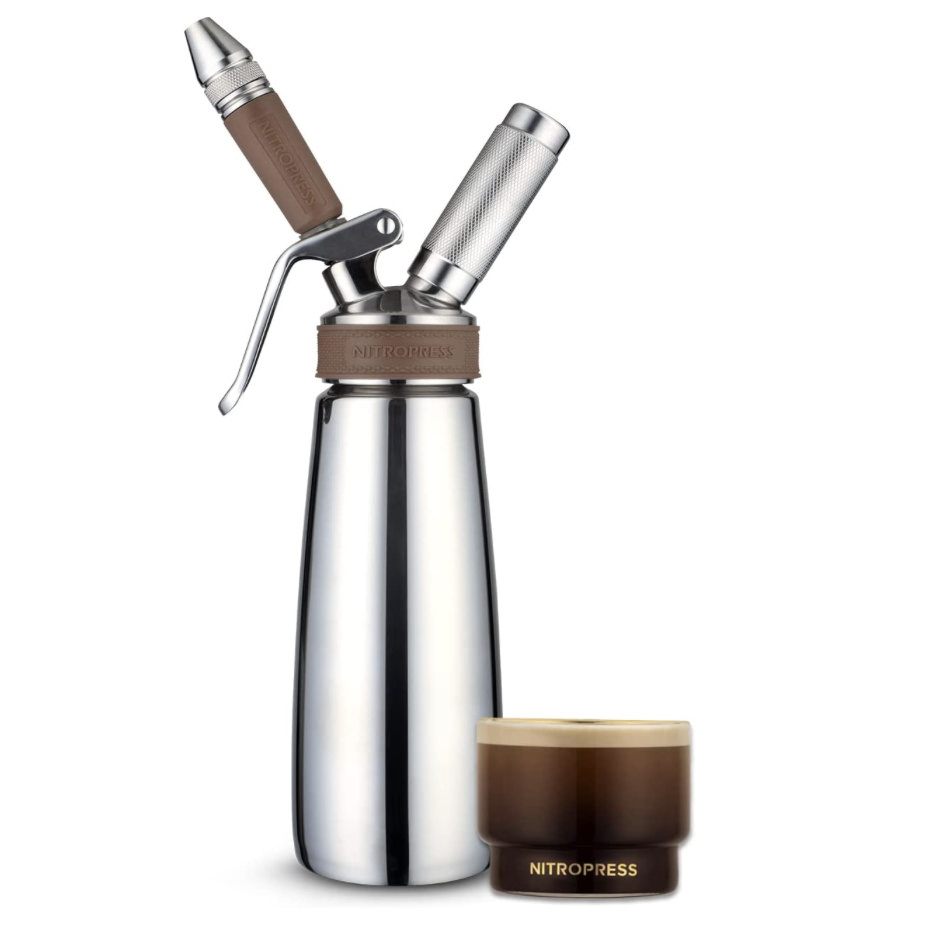
Hatfields London NitroPress

Making Nitro Coffee at Home: While it’s definitely more complex than brewing a standard pot of coffee, it is possible to make nitro coffee at home. Here’s a basic overview of the process:

  1. Brew Cold Brew Coffee: This is the base for your nitro coffee. Coarsely grind your coffee beans and then steep them in cold water for 12 to 24 hours. Strain the mixture to remove the grounds, and you have cold brew coffee.
  2. Nitrogen Infusion: For this step, you’ll need a whipped cream dispenser or a “keg” system designed for home use. Both of these should come with nitrogen cartridges. Fill the whipped cream dispenser or keg with your cold brew coffee and then follow the manufacturer’s instructions to infuse the coffee with nitrogen.
  3. Serve: Nitro coffee is typically served cold without ice (ice can dilute the frothy texture). Pour your coffee into a glass and watch as the nitrogen bubbles create a frothy, beer-like head. Enjoy as is, or add a splash of milk or sweetener if you prefer.

Please remember, using nitrogen canisters requires attention and respect for safety guidelines. Always follow the instructions and safety precautions provided by the manufacturer. If you’re not comfortable handling nitrogen gas at home, you can always enjoy nitro coffee from a local coffee shop.

Please note that if you purchase from clicking on the link, some will result in my getting a tiny bit of that sale to help keep this site going.

Spice Up Your Cup: Unique Flavored Coffee Recipes

Are you tired of the same old cup of coffee? It’s time to spice things up and elevate your coffee game with unique flavored coffee recipes. In this article, we’ll take you on a flavor-filled journey, exploring exciting combinations and techniques to transform your daily brew. Get ready to tantalize your taste buds and discover a whole new world of coffee possibilities.

Cinnamon Mocha Delight:

  • Brew a strong cup of coffee.
  • Add a pinch of ground cinnamon and a tablespoon of cocoa powder.
  • Stir well until the cocoa powder is fully dissolved.
  • Top with whipped cream and a sprinkle of cinnamon for garnish.

Coconut Cardamom Latte:

  • Prepare a shot of espresso or a strong cup of coffee.
  • In a saucepan, heat coconut milk with crushed cardamom pods on medium heat until it simmers.
  • Remove the cardamom pods and froth the flavored coconut milk using a milk frother or whisk.
  • Pour the coffee or espresso into a mug and top with the frothed coconut milk.
  • Optional: Sprinkle some grated coconut or ground cardamom on top for an extra touch.

Vanilla Maple Coffee:

  • Brew your favorite coffee.
  • Stir in a teaspoon of pure vanilla extract and a teaspoon of maple syrup.
  • Taste and adjust the amount of vanilla and maple syrup according to your preference.
  • Add a splash of milk or cream if desired.

Spiced Orange Iced Coffee:

  • Brew a strong cup of coffee and let it cool.
  • In a glass, muddle a slice of fresh orange with a pinch of ground cloves and a dash of honey.
  • Fill the glass with ice and pour the cooled coffee over it.
  • Stir gently and garnish with an orange slice or zest.

Almond Joy Latte:

  • Prepare a shot of espresso or a strong cup of coffee.
  • Heat almond milk and stir in a tablespoon of chocolate syrup and a tablespoon of coconut flakes.
  • Froth the almond milk mixture using a milk frother or whisk until creamy.
  • Pour the coffee or espresso into a mug and top with the frothed almond milk.
  • Sprinkle some additional coconut flakes and drizzle with chocolate syrup for decoration.

Congratulations, you’ve now unlocked the secrets to adding a burst of flavors to your coffee. With these unique flavored coffee recipes, you can awaken your senses and indulge in delightful creations that will leave you craving more. Remember, the world of coffee is vast and ever-evolving, so feel free to experiment, innovate, and create your own signature coffee concoctions. Let your imagination run wild as you explore the endless possibilities of combining coffee with spices, extracts, and natural ingredients. Now, go ahead and spice up your cup with these recipes, and enjoy the remarkable flavors that await you with every sip.

The Controversy of the Flat White Silky Coffee

There’s always been a certain rivalry between Australia and New Zealand, even when it comes to the origin of the controversial, silky coffee drink known as the flat white. Both countries claim to have created this fine brew, and while we might not be able to settle that debate, we can certainly delve into the rich history of this beloved beverage.

The Birth of the Flat White

The flat white’s history is a bit hazy, with both Australia and New Zealand claiming it as their invention. The term first appeared in Australia around the mid-1980s. The story goes that Alan Preston moved from Sydney to Queensland in 1985 and started a coffee shop named Moors Espresso Bar. Preston claims he invented the term “flat white” as a way to simplify the coffee menu. He wanted a term that would encapsulate the idea of a milky coffee without the froth and foam associated with a cappuccino.

On the other hand, New Zealand’s claim lies with Fraser McInnes, a barista at a well-known Wellington coffee shop named DKD Cafe. In 1989, McInnes claims he inadvertently created the flat white when the milk for a cappino failed to froth correctly. He served the drink anyway, and it became popular as a new style of coffee.

What Makes a Flat White?

A flat white is essentially an espresso-based coffee drink that contains a similar amount of coffee but less milk than a latte, and less foam than a cappuccino. A flat white is typically served in a smaller ceramic cup and features a higher ratio of coffee to milk, allowing the espresso’s flavor to shine through.

The secret of a great flat white lies in the steaming of the milk. The milk is steamed to create microfoam, which is velvety and smooth, creating a rich, creamy texture when poured over the espresso. The result is a beautifully balanced coffee drink where the espresso and milk complement each other rather than one overwhelming the other.

The Rise of the Flat White

The flat white remained a Down Under secret for many years, with only the most discerning international coffee lovers knowing of its existence. That began to change in the 2000s, as Antipodean coffee culture started spreading worldwide, especially in the UK and the USA.

The flat white started gaining recognition internationally in the late 2000s and early 2010s when big-name coffee chains began introducing it to their menus. In 2010, Starbucks started selling the flat white in their Australian stores before launching it in the USA and UK in 2015. This boosted the flat white’s popularity, and it soon became a staple on coffee menus worldwide.

The Legacy of the Flat White

Today, the flat white is a globally recognized coffee beverage. It’s the pride of Antipodean coffee culture and a testament to the influence of Australian and New Zealand coffee techniques worldwide.

In the end, whether the flat white was born in Australia or New Zealand might not matter as much as what it represents: a commitment to quality, an appreciation for balance, and a love for coffee that transcends borders. This creamy, smooth coffee drink has become a gift to coffee lovers around the world, and for that, we have our friends in the Southern Hemisphere to thank.

Please note that if you purchase from clicking on the link, some will result in my getting a tiny bit of that sale to help keep this site going.