
Using Coffee to Develop Film: A Complete Guide for Film Photographers

As a film photographer, you may be familiar with the traditional process of developing film in a darkroom. But, I have heard of people using coffee to develop black-and-white film, did you know that coffee can be used as a developer? Coffee is an inexpensive and readily available alternative to traditional film developers. I have seen some interesting and unique results from folks using coffee, though read through to the end, I did find a couple limitations. Not enough for me not to try it.

Here is a complete guide to using coffee as a film developer:

What You’ll Need:

  • Instant coffee or ground coffee beans
  • Sodium carbonate (washing soda)
  • Vitamin C powder
  • A thermometer
  • A stirring utensil
  • A darkroom or a light-proof room
  • A film developing tank and reels

Step-by-Step Process:

  1. Brew a strong pot of coffee or mix a few tablespoons of instant coffee with hot water.
  2. Add 1 teaspoon of sodium carbonate and 1 teaspoon of vitamin C powder to the coffee solution. Stir until fully dissolved.
  3. Allow the solution to cool to room temperature. The ideal temperature for coffee development is around 20-25°C.
  4. Load your film onto the developing reel and place it inside the developing tank.
  5. Pour the coffee solution into the tank, making sure that the film is fully submerged.
  6. Agitate the tank gently for the first minute, and then for 10 seconds every minute thereafter.
  7. After 10-15 minutes of development time, pour the coffee solution out of the tank and rinse the film with water.
  8. Fix the film using traditional fixing methods and rinse again with water.
  9. Hang the film to dry in a dust-free environment.

Tips and Tricks:

  • Coffee development can produce a wide range of tones, from warm sepia to cool blue. Experiment with different strengths and development times to achieve the desired effect.
  • Using high-quality coffee beans or specialty blends can produce even more interesting and unique results.
  • Coffee development may not work well with all types of film, so it’s best to experiment with a few rolls before committing to the process.
  • Coffee is not a long-term stable developer, so it’s best to use the developed film within a few months of processing.

It looks like coffee development can be a fun and creative alternative to traditional film developing methods. With a little experimentation and practice, you can achieve some truly unique and beautiful results. So why not give it a try and see what kind of coffee-inspired images you can create?

A few finer points to making coffee with a french press

French press is a great way to make a delicious cup of coffee. And while many places talk about how easy a french press is to use, there are some finer points worth saying to get a great cup of coffee. I know I went through the “what grind” and “how much”, as well “how long” questions. Here are the steps to make coffee with a French press:

  1. Start by heating water in a kettle until it reaches a temperature of around 200°F (93°C). You can use a thermometer to check the temperature or simply let the water come to a boil and then wait for 30 seconds before using it.
  2. Grind coffee beans to a coarse grind. You can use a coffee grinder to grind the beans, or purchase pre-ground coffee specifically for French press brewing.
  3. Add the ground coffee to the French press. The general rule of thumb is to use one tablespoon of coffee for every 4 ounces of water. For example, if you want to make 16 ounces of coffee, you will need four tablespoons of coffee.
  4. Pour the hot water over the coffee grounds, making sure that all of the grounds are covered with water. Stir gently to ensure that all of the coffee is saturated with water.
  5. Place the plunger on top of the French press, but do not press it down yet. Let the coffee steep for 4-5 minutes.
  6. After the coffee has steeped, slowly press down the plunger. The mesh filter will separate the coffee grounds from the liquid.
  7. Pour the coffee into your mug and enjoy!

Note: It’s important to clean your French press thoroughly after each use to prevent any buildup of coffee oils or grounds, which can affect the flavor of your future brews. This isn’t easy without getting a lot of grinds down the sink which your drain won’t like. If the grinds are dried a bit, they are easier to brush into the waste.

When buying a french press, ask yourself, “is this for the best coffee, or is it also an art statement on my kitchen counter?”. I personally like the see through options to watch the process, but you will find most of the higher end options are not glass. Please note that if you purchase from clicking on the link, I will get a tiny bit of that sale to help keep this site going.

The Art of Pour-Over Coffee Making

Brewing the perfect cup of pour over coffee requires time, patience, and practice. But with the right tools and some helpful tips, you can make a delicious cup of coffee in no time. Let’s explore some key tips to making the perfect pour over coffee. 

Preparing Your Coffee Grounds 

The first step in preparing your pour-over coffee is to grind your beans. The coarseness of the grind should depend on your preference; if you want a stronger cup of coffee, opt for a finer grind. If you want something lighter and less intense, go for a more coarse grind. Be sure to measure out the appropriate amount of grounds before grinding them up—typically two tablespoons per 6 ounces (or 180 mL) of hot water. 

Pouring Process 

Once your grounds are ready, it’s time to start pouring. Start by adding just enough water to wet all of the grounds evenly before letting it sit for 30 seconds; this allows them to “bloom” or release any trapped gases that will give your final product greater flavor and aroma. After blooming, begin slowly pouring in circles over the grounds until you reach 6 ounces (or 180 mL). Make sure not to pour too quickly or too hard; this could cause overflow and create an uneven extraction process. Letting the mixture steep for 4 minutes should be enough time to extract all the desired flavors from your grounds.  

Adding Finishing Touches 

After steeping is complete, use a spoon or paddle to break up any clumps that may have formed while brewing. This ensures that all the flavor has been extracted from every single ground particle in your cup and that there won’t be any “overflowing” particles when you drink it. Finally, add cream and sugar (if desired) before pouring into a mug or thermos for consumption. 

Making delicious pour-over coffee doesn’t have to be complicated. With these tips—and maybe a little practice—you’ll be able to brew yourself a great cup every single time. Start by grinding your beans properly—finer for strength, coarser for lightness—and then measure out two tablespoons per 6 ounces (or 180 mL) of hot water before beginning your slow circular pouring process around the grounds until they are fully saturated with liquid. Allow it to steep for 4 minutes while breaking up any clumps with a spoon or paddle before adding cream and sugar if desired before serving. With these steps in mind, you’ll have mastered the art of making great pour-over coffee in no time.

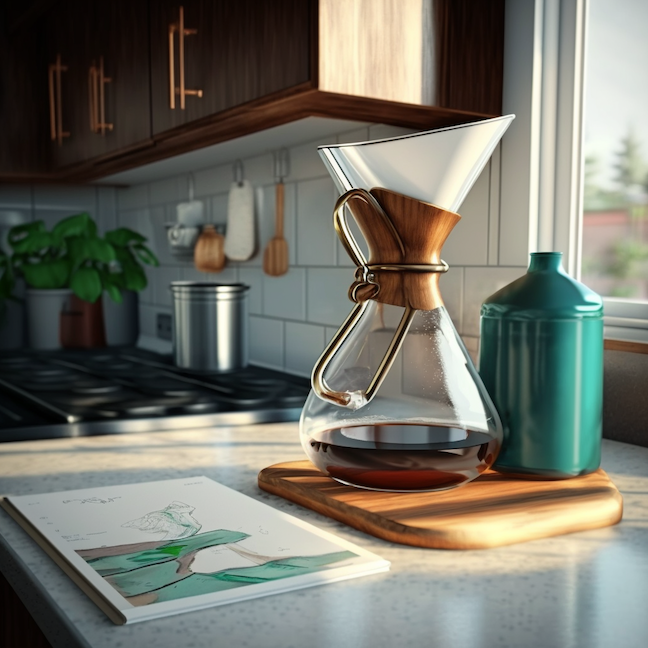
While there are many different pour over options are available. The Chemex is of course the most recognizable… and it a bit of ‘art’ for the kitchen. Though, it can be a challenge to clean if grounds get baked in a bit with its small neck. Please note that if you purchase from clicking on the link, I will get a tiny bit of that sale to help keep this site going.